
 Available in US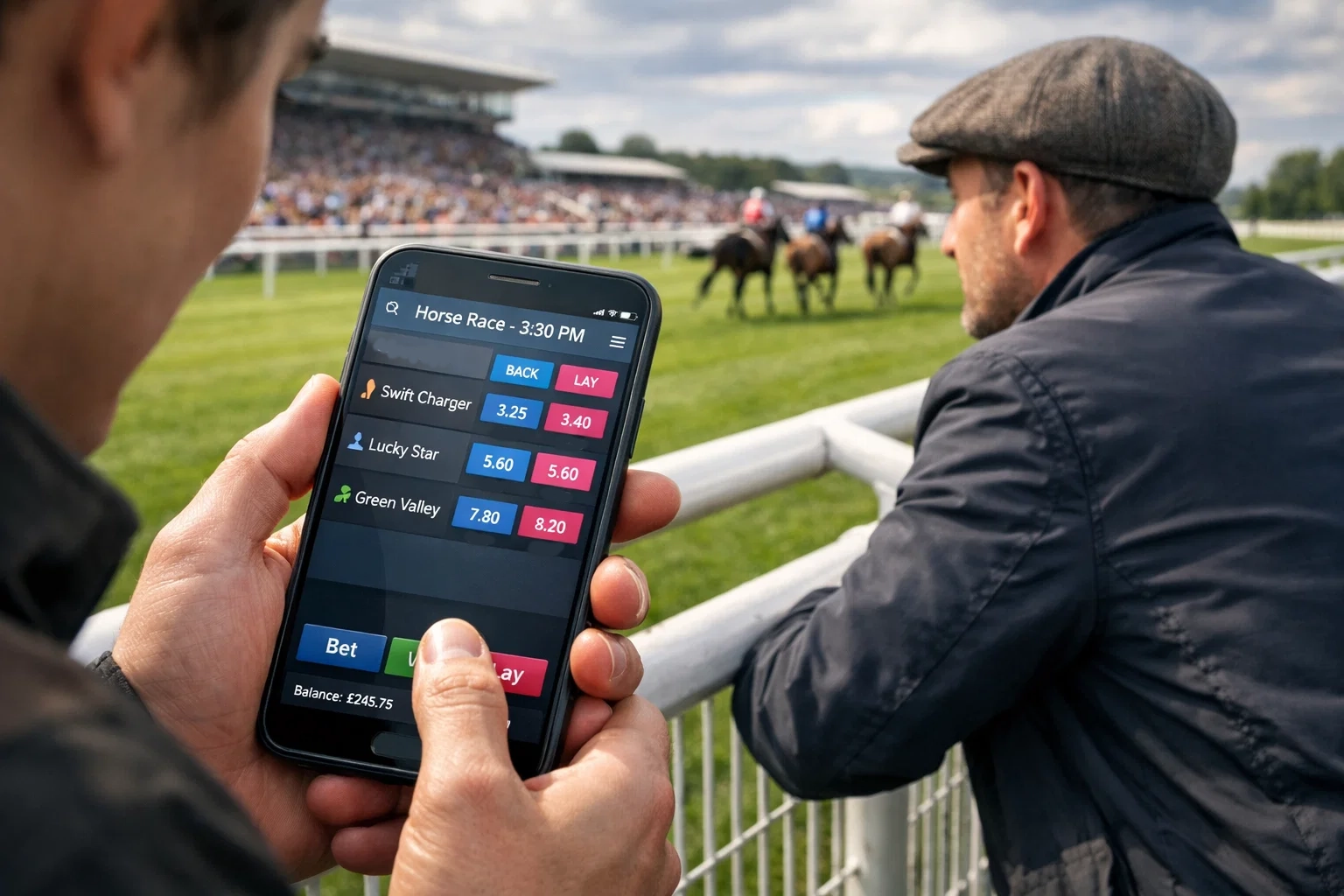
Betting exchanges represent a fundamentally different approach to wagering on horse racing. Rather than betting against a bookmaker who sets the odds, you bet against other punters in a peer-to-peer marketplace. This structure creates opportunities unavailable through traditional bookmakers, including the ability to act as the bookmaker yourself.
UK online gross gambling yield reached £7.8 billion in the year to March 2025 according to UK Gambling Commission statistics, with exchange betting contributing a significant segment to that figure. Be the bookmaker. That possibility transforms how experienced punters approach racing, though the learning curve proves steeper than conventional betting.
How Betting Exchanges Work
Betting exchanges connect people who want to back selections with those willing to lay against them. The exchange facilitates these matches, taking commission from winning bets rather than building margin into odds. This peer-to-peer model means odds reflect genuine market opinion rather than bookmaker pricing decisions.
When you request a bet on an exchange, you’re either accepting an existing offer from another user or proposing new terms for someone else to accept. The exchange displays available backs and lays with corresponding odds and stake amounts. If existing offers match your requirements, your bet fills immediately. Otherwise, your request sits in the market waiting for a counterparty.
Online gambling accounts for around 40% of total UK gambling revenue according to iGamingToday market analysis, with exchanges representing a sophisticated slice of that digital market. Exchange users tend to be more experienced than average punters, creating markets that efficiently incorporate available information.
Liquidity determines exchange usability. Liquid markets offer plenty of available backs and lays at competitive prices, allowing quick entry and exit from positions. Illiquid markets may have wide gaps between available back and lay prices, or insufficient volume to fill desired stakes. Major UK racing generally provides good liquidity, while smaller meetings may prove harder to trade effectively.
The exchange earns commission on net winnings, typically between 2% and 5% depending on operator and customer activity levels. This commission replaces the margin bookmakers build into odds. For sharp bettors who find genuine edge, commission represents better value than bookmaker margins. For casual punters, the difference may not significantly impact overall experience.
Market formation on exchanges follows different patterns than bookmaker markets. Prices often emerge closer to race time as liquidity builds, whereas bookmakers price up days in advance. This timing difference affects strategy for punters who like to bet early versus those who wait for race day.
Exchange betting requires understanding of liability as well as stake. When you lay a selection, your liability depends on the odds rather than being limited to your stake. A £10 lay at 10.0 creates £90 liability if the selection wins. This exposure can accumulate quickly across multiple lay bets, requiring careful position management.
Back vs Lay Betting
Backing on an exchange works similarly to traditional betting. You believe a selection will win, so you stake money at offered odds. If the selection wins, you receive your stake multiplied by the odds minus commission. If it loses, you forfeit your stake. The mechanics mirror bookmaker betting, though odds often prove more favourable without built-in margin.
Laying inverts the traditional relationship. You’re betting that a selection will not win, effectively taking the bookmaker’s position. If the horse loses, you keep the backer’s stake. If it wins, you pay out at the agreed odds. This ability to profit from horses losing opens strategic possibilities unavailable through conventional betting.
The relationship between back and lay prices reveals market confidence. When back and lay prices sit close together, the market has strong consensus about fair value. Wide gaps suggest uncertainty or illiquidity. Learning to read these spreads helps identify opportunities and avoid unfavourable prices.
Lay betting liability calculations require attention. Laying a £10 stake at 4.0 means accepting £10 from the backer but risking £30 if the selection wins. Your profit is the £10 stake minus commission if the selection loses. Your loss is £30 if it wins. These asymmetric payoffs differ fundamentally from backing, where maximum loss equals your stake.
Trading combines backing and laying on the same selection at different prices. Buy low and sell high, in betting terms. Back a horse at 5.0, then lay it at 4.0 as the price shortens. Regardless of race outcome, you’ve locked in profit from the price movement. This trading approach suits punters who can read market dynamics more than race outcomes.
In-play trading extends these concepts to live racing. Prices fluctuate dramatically during races as positions change. Quick reactions can capture value from momentary mispricings, though the speed required exceeds most manual capability. Many successful in-play traders use software to execute positions faster than human reaction allows.
Why Use an Exchange
Better odds represent the most straightforward exchange advantage. Without bookmaker margin, back prices typically exceed what traditional operators offer on the same selections. For regular bettors, these improved odds compound into meaningfully better returns over time. The difference becomes particularly noticeable on shorter-priced selections where bookmaker margins consume larger proportions of potential returns.
Lay betting provides unique strategic options. Think a favourite is over-bet? Lay it. Expect a well-fancied horse to drift in the market? Back now, lay later. These positions are impossible with bookmakers. Exchange users can profit from being right about which horses won’t win, not just which will.
Account restrictions rarely affect exchange users. Bookmakers routinely limit or close accounts of successful punters whose activity threatens their margins. Exchanges welcome winning customers because their commission model profits regardless of who wins. Sharp bettors often migrate to exchanges after facing bookmaker restrictions.
Market transparency on exchanges shows exactly where other punters have positioned. The order book reveals available prices and stakes, helping assess whether your views align with or oppose market consensus. This information proves valuable for both agreeing with market sentiment at good prices and identifying potential mispricings.
Flexibility in position management exceeds bookmaker offerings. Close positions before races conclude. Adjust exposure as information emerges. Trade around selections based on market movements. This dynamic approach suits punters who view betting as active engagement rather than passive wager placement.
Best Exchange Apps for Racing
The betting exchange landscape offers fewer options than traditional bookmakers, with liquidity concentrating on major platforms. Choosing the right app depends on your trading style, typical stake sizes, and which features matter most.
Betfair Exchange dominates UK exchange betting with the deepest liquidity across horse racing markets. Their app provides comprehensive access to pre-race and in-play markets, with the trading interface refined over two decades of operation. Commission rates start at 5% but reduce based on activity levels, rewarding high-volume users. For serious exchange betting, Betfair’s liquidity makes it the default choice.
Betfair also offers a sportsbook alongside their exchange, allowing users to switch between exchange and fixed-odds betting within the same app. This dual access suits punters who want exchange advantages on some bets while preferring bookmaker simplicity on others. Best odds guaranteed on the sportsbook complements exchange functionality.
Smarkets positions itself as a lower-commission alternative, charging just 2% on winning bets. This reduced commission appeals to high-volume bettors where percentage points materially affect returns. Liquidity trails Betfair on horse racing, though major UK fixtures attract sufficient volume for most purposes. The app interface prioritises clean design over feature density.
Betdaq offers another exchange alternative with commission structures competitive against Betfair. Racing liquidity has improved in recent years, though it remains a secondary consideration to Betfair for most punters. The platform suits those wanting exchange functionality without Betfair dominance, or as a comparison point for pricing.
Spreadex provides spread betting options alongside exchange functionality, creating hybrid possibilities for sophisticated punters. The app handles both disciplines within a single interface, though the learning curve steepens when incorporating spread betting strategies. Liquidity on pure exchange betting trails dedicated platforms.
For most exchange newcomers, starting with Betfair makes practical sense given their liquidity advantage. As understanding develops, exploring alternatives for commission savings or specific feature preferences becomes more relevant. The exchange learning curve already challenges newcomers; adding liquidity concerns unnecessarily complicates initial experiences.
Betting Exchange Apps — More on this topic at horse racing betting apps.
See also Royal Ascot Betting Apps.
